
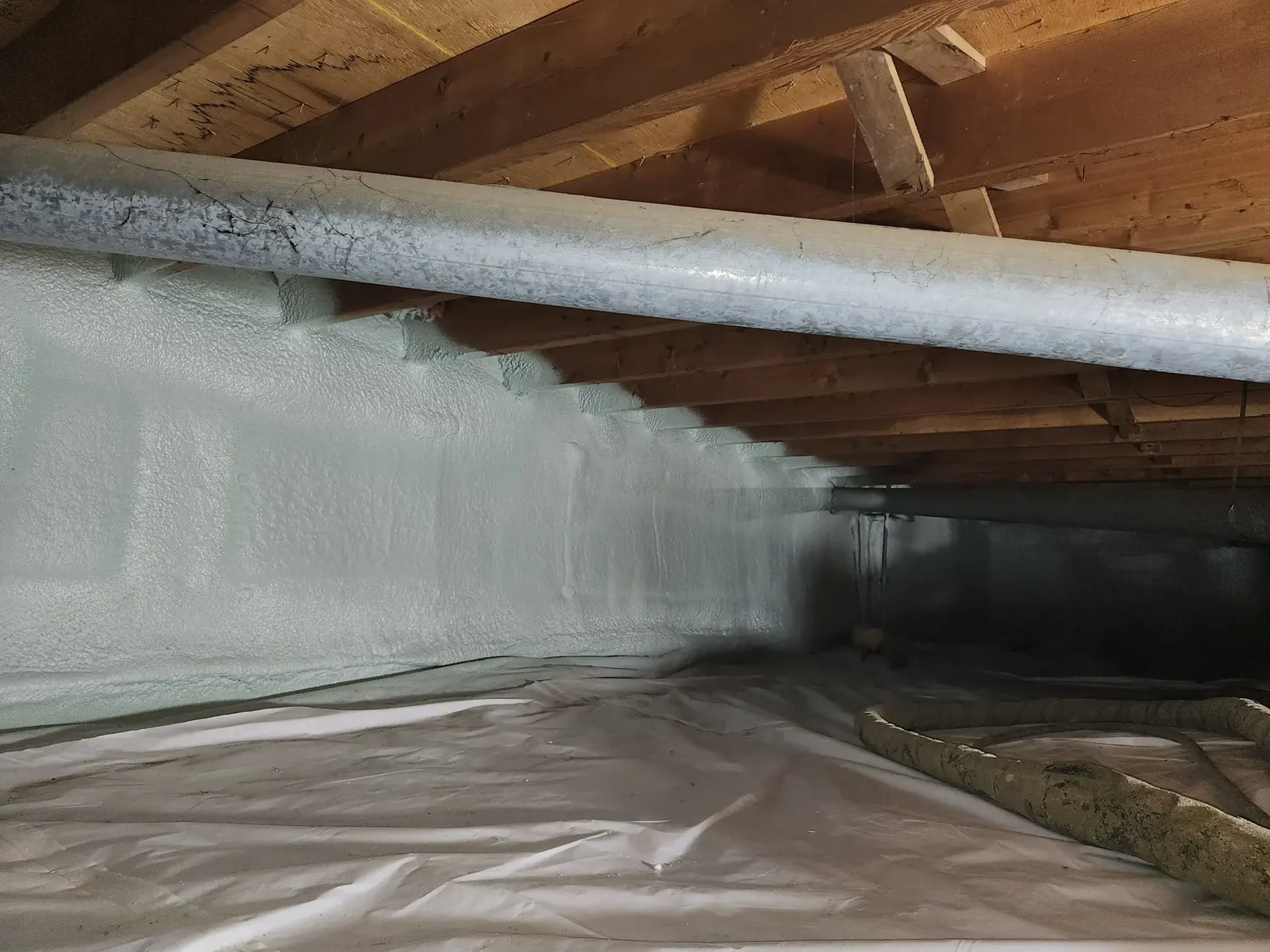
Air Sealing
Stop the Leaks Before
You Add the Insulation
Cold floors, a drafty hallway, an upstairs that never cools down: these are air leaks, and no amount of insulation fixes them on its own. We find every leak with a blower door test, seal them in the right order with the right materials, and retest so you see the difference as a number, not a feeling. Utility rebates handled.



Why Air Sealing Comes First
Insulation slows heat. Air sealing stops the leak.
Your house breathes through its gaps. In winter, warm air rises and escapes through the attic floor while cold air gets pulled in low through the rim joist and crawl space, a stack effect that runs all day, every day. Insulation alone does nothing to stop it. Sealing the leak paths is what turns a leaky house into one that holds the comfort you pay for.
Drafts and cold floors end
The air movement you feel at the baseboards and under doors stops at the source.
Insulation finally performs
Without air moving through it, attic and wall insulation delivers the R-value it was sold on.
Lower heating and cooling costs
Fewer air changes per hour means the furnace and AC run less to hold the same temperature.
Cleaner indoor air
Less dust, pollen, and crawl space air pulled through the walls and into the rooms you live in.
Fewer ice dams
Warm attic bypasses melt roof snow that refreezes at the eaves. Sealing them is the real fix.
How It Works
How our air sealing process works
Blower Door Test
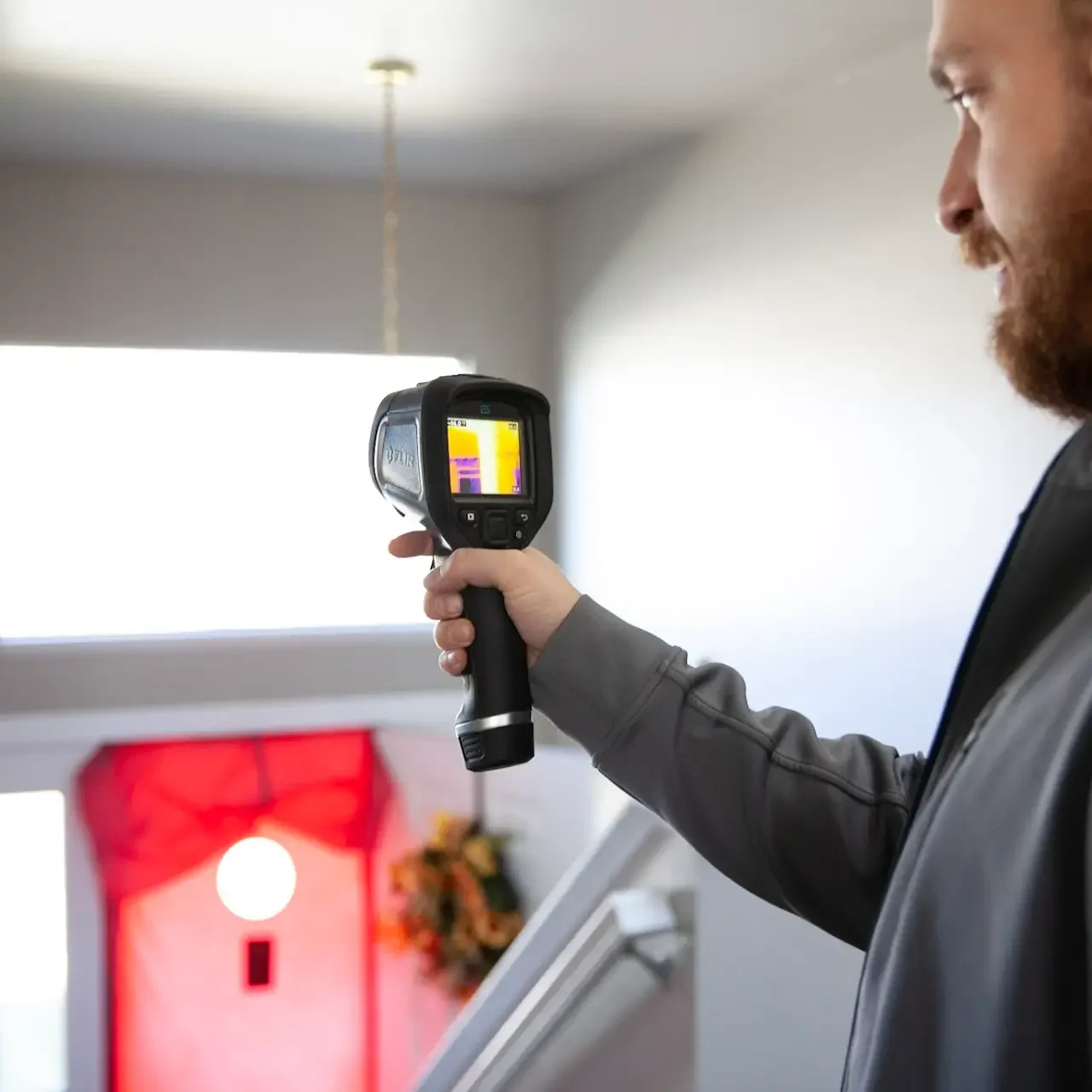
We depressurize the house, measure the baseline leakage, and trace the leaks with smoke and thermal imaging.
Map & Prioritize
Attic floor first, then the rim joist, ducts, and penetrations. Biggest leaks get sealed first so the work pays back fastest.
Seal With the Right Material
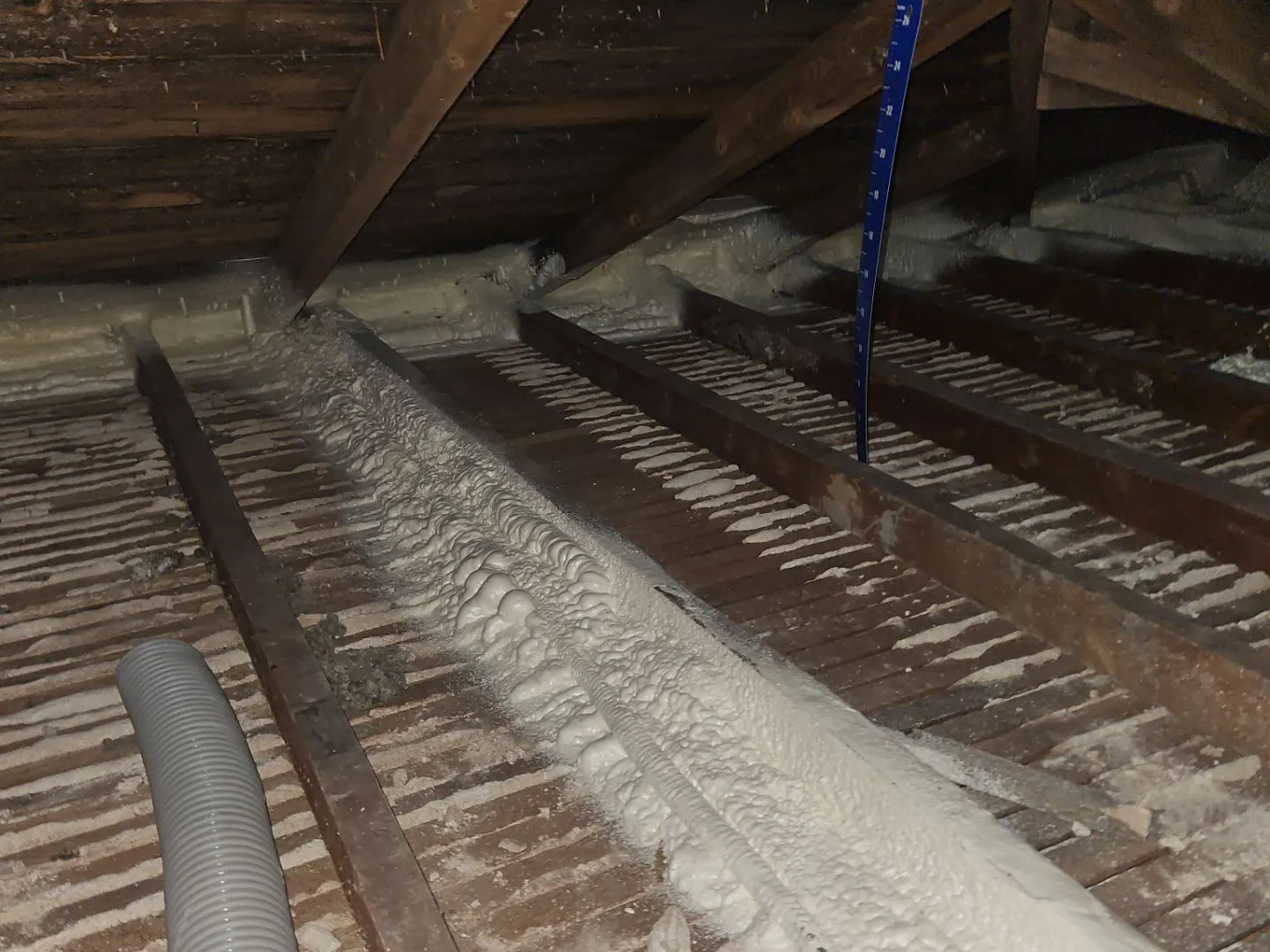
Spray foam, fire-rated sealant, mastic, caulk, and weatherstripping, each matched to the gap and the code that applies to it.
Retest & Verify
A second blower door number proves the result and confirms the house still gets the fresh air it needs.
Where Homes Leak
The leaks we find in almost every Front Range home
Attic bypasses
Top plates, plumbing and wiring chases, recessed lights, and the attic hatch. The largest and most-ignored leaks in the house.
Rim joist
Where the framing sits on the foundation, cold air enters along the whole perimeter of the house.
Ducts in unconditioned space
Leaky seams in attic and crawl space ductwork dump heated and cooled air where nobody lives.
Penetrations
Every pipe, wire, vent, and flue that passes through a wall or ceiling leaves a gap behind it.
Windows and doors
Not the glass, the framing gap behind the trim. Sealing it is cheaper than replacing the window and often the bigger win.
Whole-Home Approach
Make the seal count
Air sealing is step one. Insulation, a full energy audit, and the rest of the envelope work multiply what it does.
Reviews From Happy Clients
Rated 5.0 on Google
Had a good experience with PowerHouse? A quick review helps the next Colorado homeowner find us.
Leave Us a Google ReviewFAQs
Frequently Asked Questions
What is air sealing?
Air sealing closes the hidden gaps where conditioned air leaves your house and outdoor air gets in: attic penetrations, top plates, rim joists, duct connections, and the framing around windows and doors. It is different from insulation. Insulation slows heat moving through a surface; air sealing stops air moving through a hole.
Why do you seal before you insulate?
Because insulation does not stop moving air. Blow fresh insulation over an attic full of open chases and recessed lights and warm air keeps rising straight through it. Sealing first is what lets the insulation perform the way the R-value on the bag promises.
How do you find the leaks?
With a blower door. A calibrated fan depressurizes the house so every leak pulls in outside air at once, and we trace them with smoke and thermal imaging instead of guessing. You get a measured number for how leaky the house is before and after.
Where do Colorado homes leak the most?
The attic floor, almost every time. Plumbing and wiring chases, recessed lights, the tops of interior walls, and attic hatches are the big ones, followed by the rim joist where the house meets the foundation and any ducts running through unconditioned space.
What materials do you use?
It depends on the gap. Two-part spray foam for large bypasses and rim joists, fire-rated sealant around flues and chimneys, caulk and foam for small penetrations, mastic on duct seams, and weatherstripping on hatches and doors. Never a single product for everything.
Will air sealing make my house too tight?
A blower door test tells us exactly how tight the house is, and building science has a clear line for when mechanical ventilation is needed. If your home reaches it, we say so and plan for it. Most existing homes we test are far leakier than that line.
Does air sealing help in summer?
Yes. The same stack effect that pulls warm air out through the attic in January pulls hot attic air in during July. Sealing the attic floor keeps upstairs bedrooms cooler and your AC running less.
Are there rebates for air sealing?
Often yes. Utility programs like Xcel Energy and Efficiency Works regularly rebate air sealing work, usually alongside insulation, and we track the current programs and handle the paperwork for you.
How long does air sealing take?
Most homes are a single day of work, often paired with insulation in the same visit. The blower door test at the start and the retest at the end are part of that day.
Where do you offer air sealing?
Across the Colorado and Wyoming Front Range, including Fort Collins, Wellington, Loveland, Greeley, Longmont, Boulder, Denver, and Cheyenne.
Get Started Today
Find out how much air your home is losing
One blower door test replaces every guess. Get a free quote, and if your home qualifies for an Xcel Energy or Efficiency Works rebate, we file it for you.
970-825-0950