
Blower Door Testing
The Number Behind
Every Job We Do
Most contractors will tell you your house is drafty. We will tell you how drafty, in cubic feet per minute, before we touch it and again after we are done. The blower door is the instrument that makes air sealing a measured result instead of an opinion.




How It Works
A fan, a gauge, and an honest number
The Department of Energy describes it this way: a powerful fan mounted in a frame that fits an exterior doorway pulls air out of the house. The pressure inside drops, and outdoor air flows in through every unsealed gap and unwanted opening. A manometer measures the pressure difference and the airflow through the fan, which gives an exact measurement of how much air is moving through the house. Uncalibrated fans can help you spot leaks; only a calibrated blower door tells you the amount.
The standard test pressure is 50 Pascals, which puts roughly a steady 20 mph wind on every wall at once, so the test is repeatable on a calm day in July and a gusty one in January. The result is CFM50, the fan flow needed to hold that pressure, and ACH50, the same number expressed as air changes per hour for the volume of your house. Lower is tighter. Yours is the number that matters, and you get it twice: before the work and after.
What The Number Means
Reading your result
A blower door result without context is just a number. Here is the context.
The code benchmark
The 2021 International Energy Conservation Code requires a new home in climate zones 3 through 8, which covers all of Colorado and Wyoming, to test at or under 3 air changes per hour at 50 Pascals. That is the bar a new house has to clear today.
Where existing homes land
Front Range homes from the 1960s through the 2000s commonly test at several times the new-construction limit. We have measured ranches and two-stories that leaked the volume of the whole house every few minutes under test pressure.
The target after sealing
We aim to cut the number substantially while keeping the house above the point where it needs mechanical ventilation, and we tell you if the house crosses that line. Tighter than its ventilation plan is a problem we design around, not one we leave you with.
Where the air was going
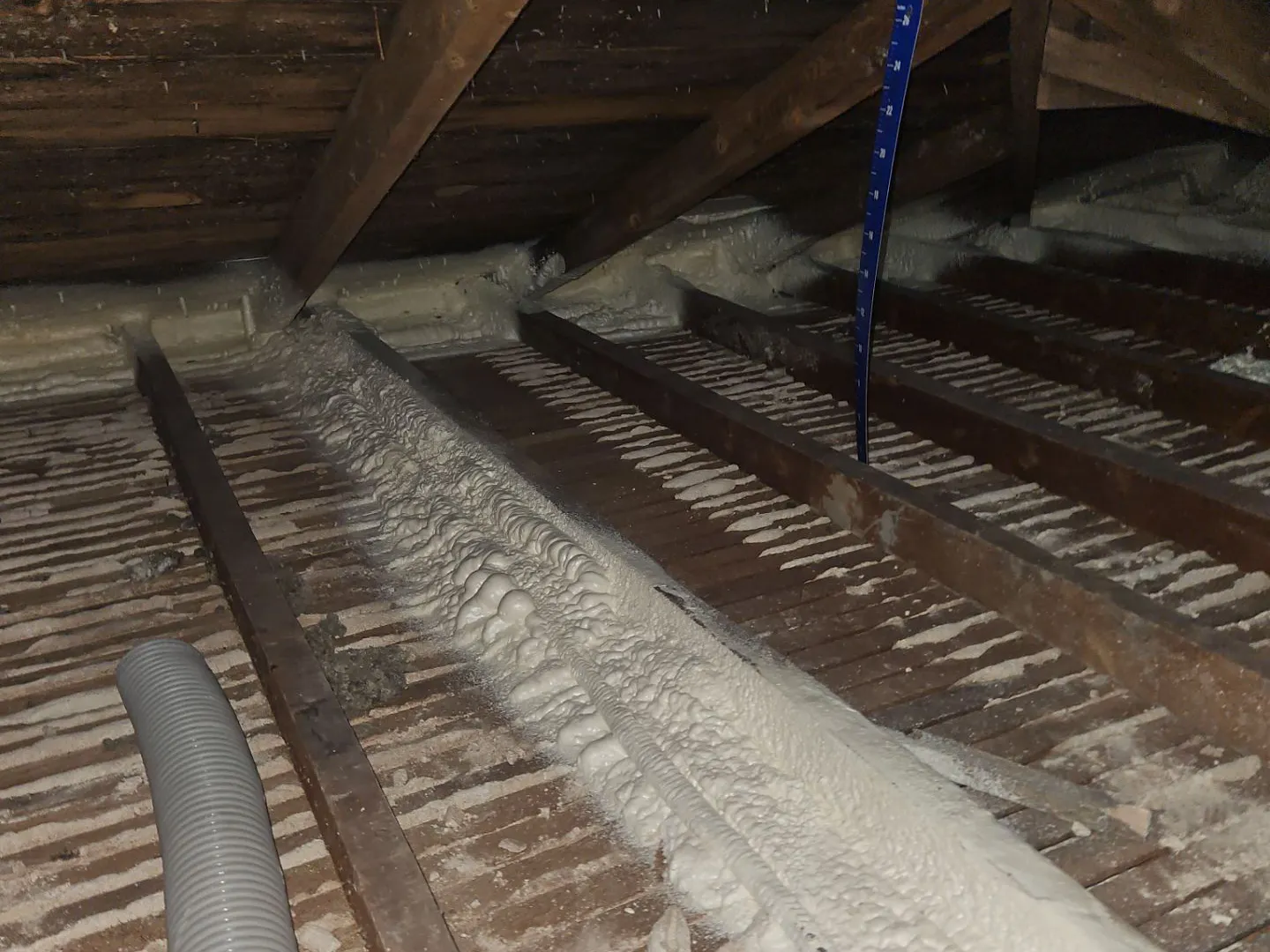
Attic bypasses and the rim joist usually account for most of the leakage; windows and doors, the parts people worry about, usually account for little. The test redirects the budget to the leaks that matter.
How It Works
The test, start to finish
Set up
Windows closed, interior doors open, combustion appliances off, fireplace damper closed. The frame and fan go in an exterior door and the gauge is connected.
Baseline
The fan brings the house to 50 Pascals and the gauge records CFM50. We convert it to ACH50 for your house volume and photograph the reading.
Find the leaks
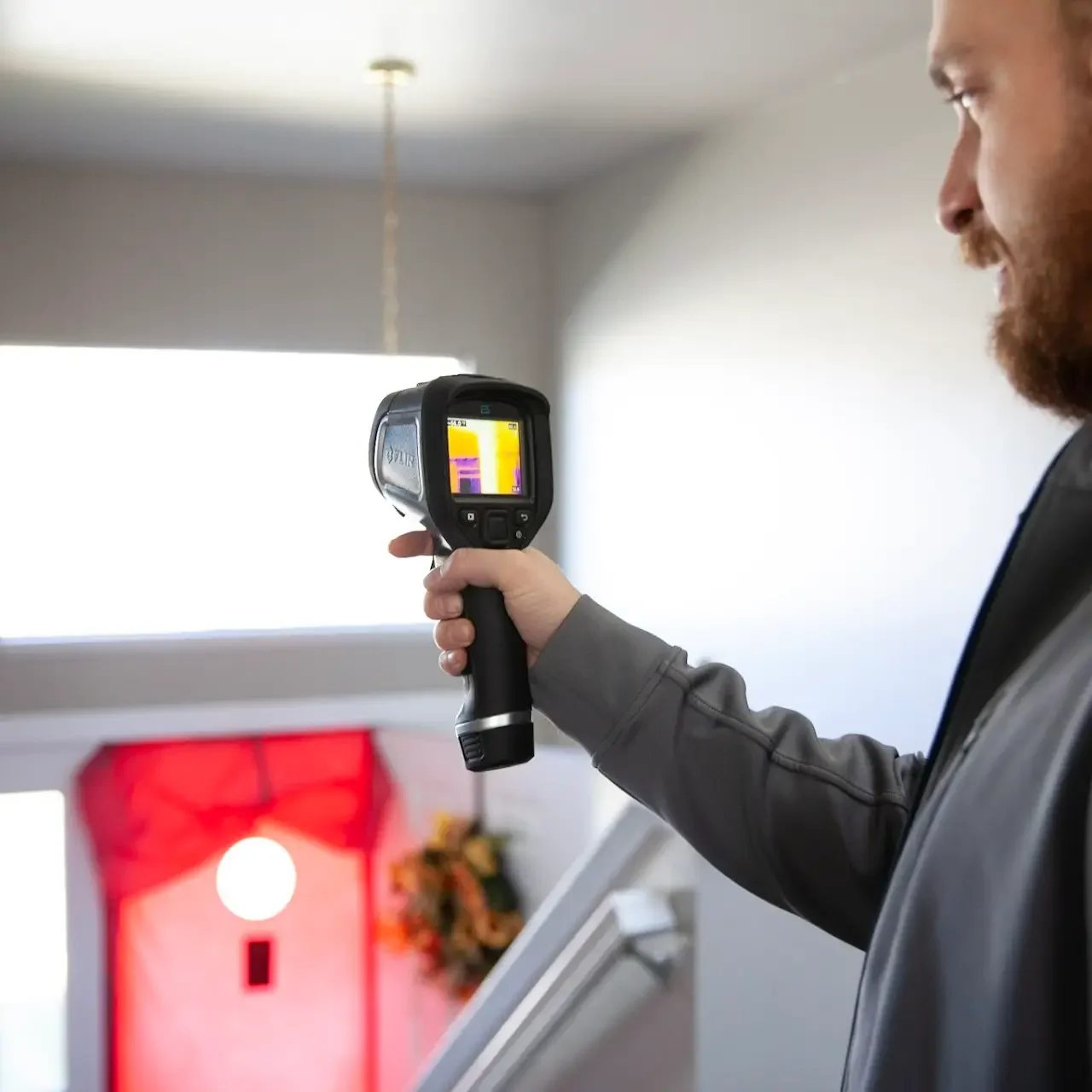
With the fan still running, a thermal camera and a smoke pencil trace the incoming air to its sources: top plates, rim joist, can lights, hatch, duct boots, penetrations. Each one is photographed and ranked.
Seal, then retest
The air sealing is aimed at the ranked list. When the crew finishes, the fan goes back in and the house is tested again. You get both numbers, the photos, and the receipt.
Why It Matters
Measured work is work you can trust
EPA estimates that homeowners can save an average of 15% on heating and cooling costs by air sealing their homes and adding insulation in attics, over crawl spaces, and at accessible basement rim joists. The scenario behind that estimate cut air infiltration by a quarter, which is a realistic blower door result on a leaky Front Range home. The test is how you know whether your house got there.
Savings vary. Find out why in the seller’s fact sheet on R-values. Higher R-values mean greater insulating power.
It is also the instrument behind our home energy audit, the first step on an ice dam job, and the way we prove that a cold bonus room is fixed rather than just insulated. Efficiency Works and Xcel rebate air sealing work, and the test results are part of the paperwork we file.
Where We Do This Work
Blower door testing across the Front Range
Before-and-after testing on every envelope job across the Front Range.
Whole-Home Approach
What the test leads to
The blower door finds the leaks. These are the services that close them and the audit that puts them in order.
Reviews From Happy Clients
Rated 5.0 on Google
Had a good experience with PowerHouse? A quick review helps the next Colorado homeowner find us.
Leave Us a Google ReviewFAQs
Blower door questions, answered
What is a blower door test?
A calibrated fan mounted in an exterior doorway pulls air out of the house, lowering the pressure inside so outdoor air flows in through every gap. A gauge called a manometer measures the pressure difference and the airflow through the fan, which gives an exact number for how much air the house leaks. That is the Department of Energy’s description, and it is what we do on every envelope job.
What do CFM50 and ACH50 mean?
CFM50 is the cubic feet per minute of air the fan has to move to hold the house at a 50 Pascal pressure difference, a standard test pressure that roughly mimics a steady 20 mph wind on every side at once. ACH50 converts that to air changes per hour by dividing by the house volume, so homes of different sizes can be compared. Lower is tighter.
What is a good number?
The 2021 energy code requires new homes in our climate zones to test at or under 3 air changes per hour at 50 Pascals. Existing Front Range homes from the 1960s through the 2000s commonly test several times that. We do not quote a single typical number because every house is different; we quote yours, before and after.
Why test before air sealing?
Because the test is how we find the leaks, not just count them. With the fan running, a thermal camera and a smoke pencil show exactly where air is pouring in: top plates, the rim joist, recessed lights, the attic hatch, duct boots. The work gets aimed at the biggest paths instead of caulking the windows and hoping.
Why test again after?
So the result is proven. The second number tells you, in the same units, how much tighter the house is. It also catches anything we missed while the crew is still on site. A job without a second test is a job that was assumed to work.
How long does the test take?
Setup and the test itself take under an hour. The diagnostic walk with the camera and smoke pencil while the fan runs is where the value is, and that is another hour or so depending on the house.
What do I need to do before the test?
Close exterior doors and windows, open interior doors, make sure fireplace ashes are cold and dampers closed, and turn off combustion appliances and exhaust fans for the duration. We walk you through it when we schedule.
Is a blower door test the same as an energy audit?
It is the core of one. Our home energy audit pairs the blower door with a thermal scan, insulation depth checks, duct testing, and combustion safety testing, and produces a prioritized report. The blower door alone is the right choice when you already know you want air sealing and want the before and after numbers.
Can a house be too tight?
A house can be tighter than its ventilation plan. Below a few air changes per hour, a home needs mechanical ventilation to bring in fresh air on purpose instead of by accident. We tell you when a house crosses that line and what to do about it. Most Front Range homes are nowhere near it.
Does air sealing save money?
EPA estimates that homeowners save an average of 15% on heating and cooling costs by air sealing and adding insulation in attics, over crawl spaces, and at basement rim joists. Savings vary. Find out why in the seller’s fact sheet on R-values. Higher R-values mean greater insulating power.
Get Started Today
Get your number
A blower door test with the thermal walk-through, photographed and explained, so you know exactly where your house leaks and what fixing it is worth.
970-594-8280