
Attic Insulation
The Attic Is Where
Front Range Homes Lose
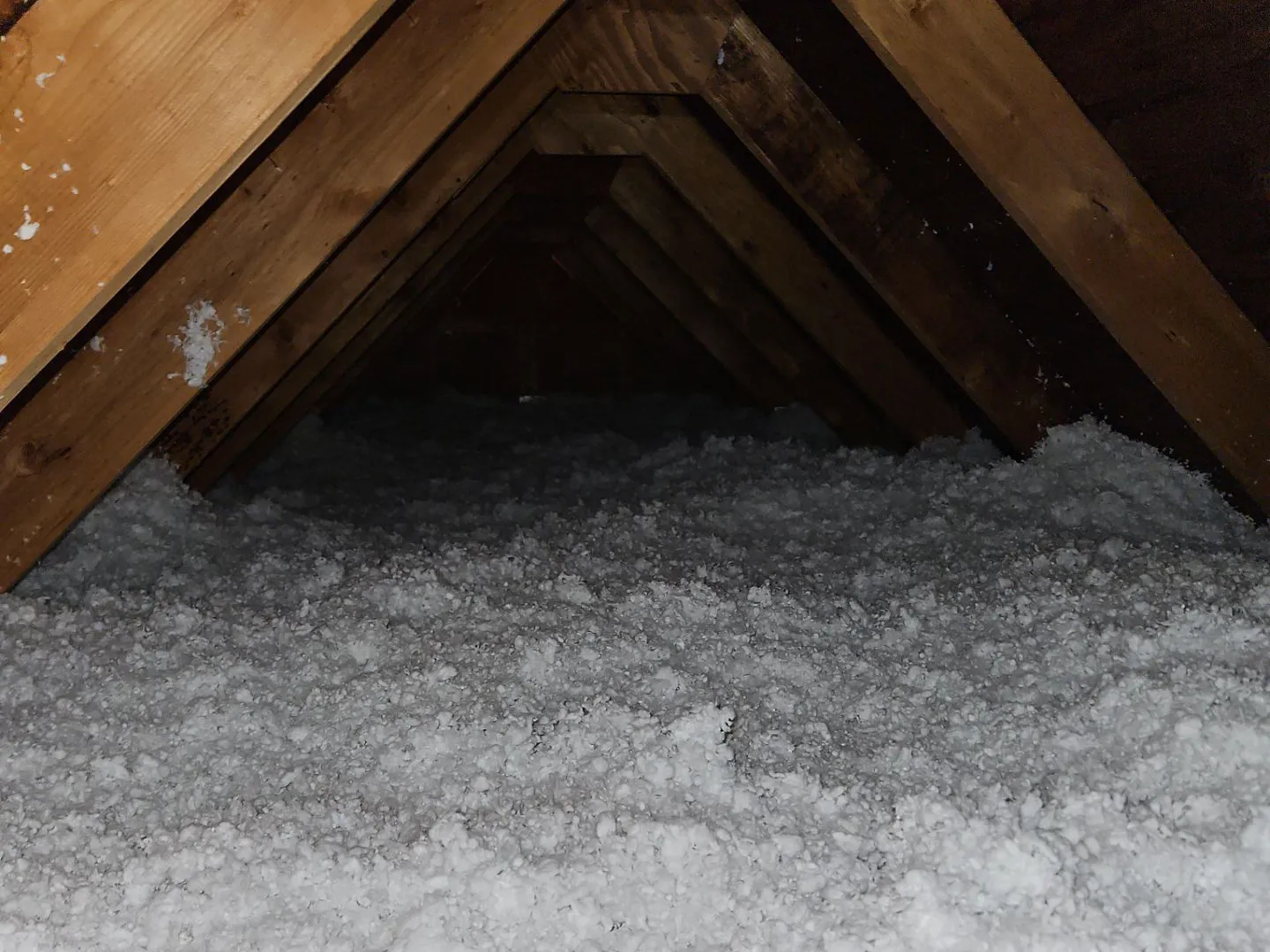
Heat rises, and in most Northern Colorado homes it keeps going: through a ceiling nobody sealed and into an attic with half the insulation the climate calls for. We seal the ceiling first, then blow the attic to the depth ENERGY STAR recommends for our climate zone, and we measure both so you know what you paid for.



How Much Is Enough
The number for our climate zone
Larimer County and the rest of the Northern Colorado and Denver metro Front Range sit in climate zone 5 under the 2021 International Energy Conservation Code. Cheyenne is zone 6. ENERGY STAR publishes a recommended R-value for existing wood-framed homes in each zone, and for both of ours it is the same:
Attic with no insulation
R60
ENERGY STAR target, zones 5 and 6
Attic with 3 to 4 inches already
R49
added on top, zones 5 and 6
Roughly what R-49 looks like
16 to 18 in
of blown insulation, per ENERGY STAR
The quick check, straight from ENERGY STAR: look across your attic floor. If the insulation sits level with or below the tops of the joists, you probably need more. Most Front Range attics built before 2010 were insulated to the code minimum of their year, which was well under today’s target, and decades of settling have taken it lower. We measure depth at several points across the attic and report the shortfall in inches and R-value, not in adjectives.
Before The Blow
Air sealing comes first, every time
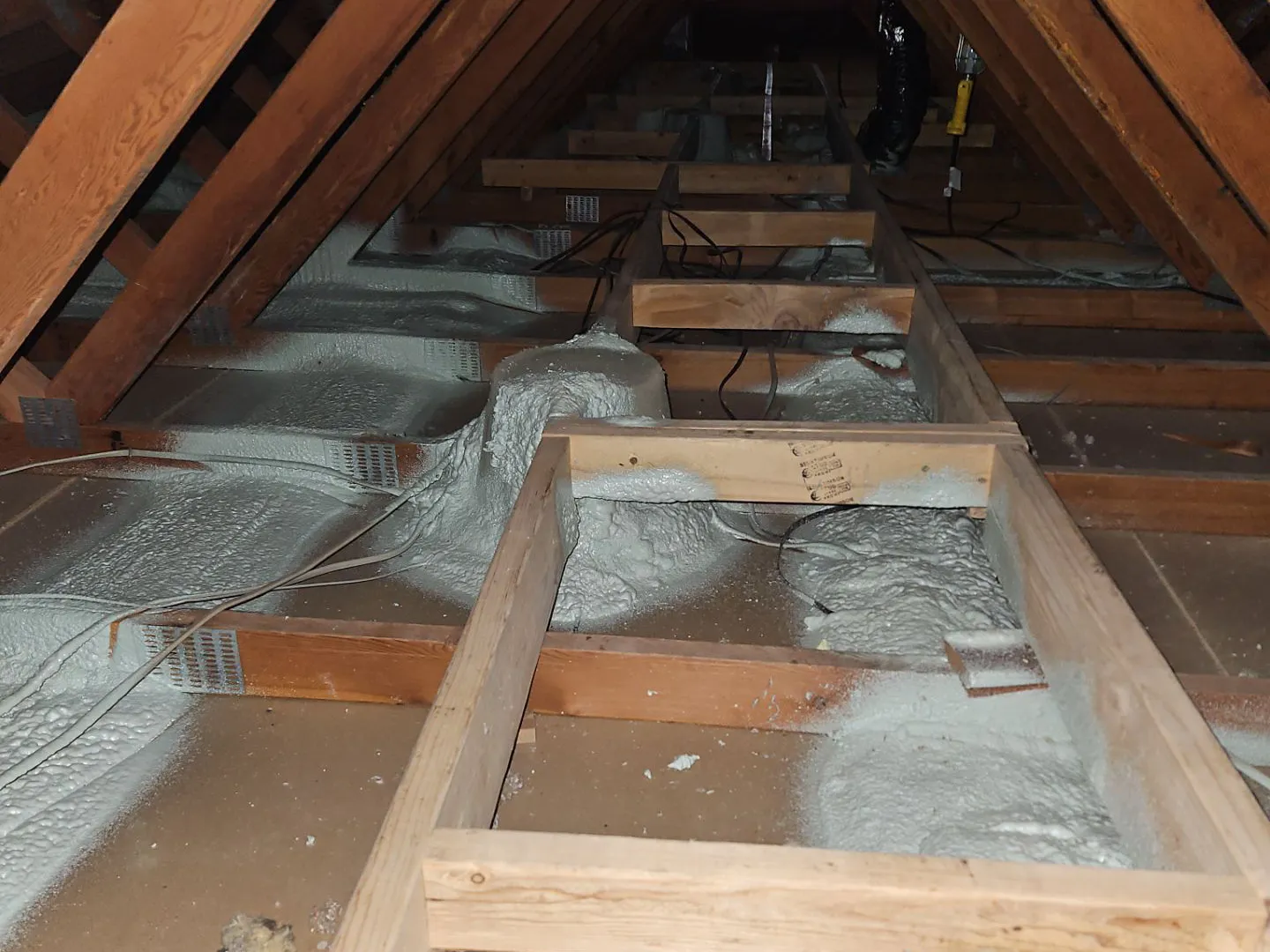
Insulation resists heat conducting through it. It does almost nothing about air moving around it, and a typical Front Range ceiling has dozens of open paths into the attic. Blow new insulation over them and you have hidden the leaks, not fixed them. Our attic job starts with a sealed ceiling.
Top plates
The seam where drywall meets the top of every interior wall runs the length of the house. It is usually the largest single leak in the attic, and sealing it is foam and a few hours.
Recessed lights and fixtures
Older can lights are open to the attic and pull warm air out of the room all winter. They get sealed covers or a rated replacement before anything is blown around them.
Plumbing, wiring, and duct penetrations
Every hole drilled for a pipe, a wire, or a duct boot is a chimney. Each one is sealed.
The attic hatch
A hatch without weatherstripping and an insulated cover leaks more than a window. It gets both.
Chimneys and flues
Sealed with fire-rated material at the clearance the code requires, with a metal dam so insulation never touches a hot flue.
How It Works
How an attic insulation job runs
Measure
Depth checks across the attic, a blower door test on the house, and a thermal scan of the ceiling from below. You see the shortfall in numbers before we quote.
Seal
Top plates, penetrations, fixtures, the hatch, and the chimney clearance. The blower door is run again so the sealing is proven, not assumed.
Prep
Soffit baffles at every eave bay so the attic keeps breathing, dams around the hatch and any mechanicals, depth markers across the attic.
Blow and verify
Cellulose or fiberglass blown to the target depth and density, then checked against the markers. You get the signed receipt with coverage area, thickness, and R-value.
Material Choices
Blown-in cellulose, blown-in fiberglass, or batts
There is no single right material. There is a right material for each attic, and the install matters more than the bag it came in.
Blown-in cellulose
Dense, fills around framing and wiring without gaps, and settles predictably when installed to the right depth. Our default for most retrofits.
Blown-in fiberglass
Lighter, does not absorb moisture, and a good fit where a damp history or a very low-pitch attic argues against cellulose.
Batts
Right for open, accessible bays with no obstructions, which describes very few existing attics. Batts cut around every wire and pipe leave gaps that cost real R-value.
Spray foam at the roof deck
The option when the attic has to become conditioned space: ducts and an air handler up there, or a finished room behind knee walls. A different job with a different budget, and we tell you when it is the right call.
What It Is Worth
The best-documented upgrade in the house
EPA estimates that homeowners can save an average of 15% on heating and cooling costs, about 11% of total energy costs, by air sealing their homes and adding insulation in attics, floors over crawl spaces, and accessible basement rim joists. That estimate is modeled on typical existing U.S. homes brought up to 2012 code insulation levels with a 25% cut in air leakage, which is close to what a sealed, topped-up Front Range attic delivers.
Savings vary. Find out why in the seller’s fact sheet on R-values. Higher R-values mean greater insulating power.
Then there is the part the bill does not show: the upstairs bedroom that finally holds a temperature, the furnace that cycles instead of running, the ice dams that stop forming because the roof deck stays cold. Rebates on top: Efficiency Works pays per square foot in its four cities, Xcel rebates insulation and air sealing, and we file all of it. See the rebate pages for your utility.
Where We Do This Work
Attic insulation across the Front Range
The same target R-value across the territory, matched to each city’s housing era and utility rebates.
Whole-Home Approach
The attic is step one of a whole-home envelope
Air sealing first, then the attic, then the floors and walls that still leak. These are the pieces that go with it.
Reviews From Happy Clients
Rated 5.0 on Google
Had a good experience with PowerHouse? A quick review helps the next Colorado homeowner find us.
Leave Us a Google ReviewFAQs
Attic insulation questions, answered
How much attic insulation should a Northern Colorado home have?
Fort Collins, Loveland, Greeley, Longmont, Boulder, and the Denver metro are in climate zone 5, and Cheyenne is zone 6. For both, ENERGY STAR recommends R60 in an attic that has no insulation and R49 added on top of an existing 3 to 4 inches. In blown insulation that is roughly 16 to 18 inches of depth for R-49, and more for R60.
How do I know if my attic needs more?
ENERGY STAR’s rule of thumb: look across the attic floor. If the insulation is level with or below the tops of the floor joists, you almost certainly need more. Most Front Range attics built before 2010 fail that test. We measure the depth in several spots and check it against the target, not against what the builder put in.
Blown-in cellulose or blown-in fiberglass?
Both reach the target R-value when installed to the right depth and density. We match the material to the attic: existing insulation type, moisture history, access, and what the rebate program accepts. The install quality matters more than the brand, which is why we measure depth across the whole attic, not just at the hatch.
Why do you air seal before insulating?
Because insulation slows heat that conducts through it and does almost nothing about air that moves around it. Warm air leaves through top plates, recessed lights, plumbing and wiring holes, and the attic hatch. Seal those first and the new insulation performs the way its R-value promises. Blow insulation over open leaks and you have buried them.
Will adding attic insulation lower my bills?
EPA estimates that homeowners save an average of 15% on heating and cooling costs by air sealing and adding insulation in attics, over crawl spaces, and at basement rim joists. Savings vary. Find out why in the seller’s fact sheet on R-values. Higher R-values mean greater insulating power.
Should the old insulation come out first?
Usually not. Dry, clean, settled insulation stays and gets topped up after air sealing. It comes out when it is wet, moldy, rodent-contaminated, smoke-damaged, or is suspected vermiculite. Our insulation removal page covers each case.
What about attic ventilation?
A vented attic needs its soffit vents kept open with baffles so the new insulation does not block airflow, and it needs a sealed ceiling below it so house air is not feeding the attic in the first place. We install baffles at every soffit bay, dam the hatch and the eaves, and keep the chimney and flue clearances the code requires.
Are there rebates for attic insulation?
Yes, depending on who bills you. Efficiency Works (Fort Collins, Loveland, Longmont, Estes Park) pays per square foot on attic insulation and air sealing, Xcel Energy rebates insulation and air sealing, and the co-ops rebate heat pumps rather than insulation. We confirm your utility and file the paperwork.
How long does an attic job take?
Most attics are one day: air sealing in the morning, baffles and dams, then the blow. Larger or more cut-up attics run two. You get a dated, signed receipt showing the coverage area, the installed thickness, and the R-value, which the FTC requires of every installer and which your rebate program will ask for.
Do you do attic insulation in Cheyenne?
Yes. Cheyenne is climate zone 6, one step colder than Northern Colorado, so the same R60 and R49 targets apply with even more reason. Wind is the other factor: a sealed ceiling matters more in Cheyenne than almost anywhere we work.
Get Started Today
Find out how far short your attic is
A depth check and a blower door test put a number on it. Free quote, every rebate confirmed before you commit, and a signed receipt with the installed R-value when the job is done.
970-594-8280