
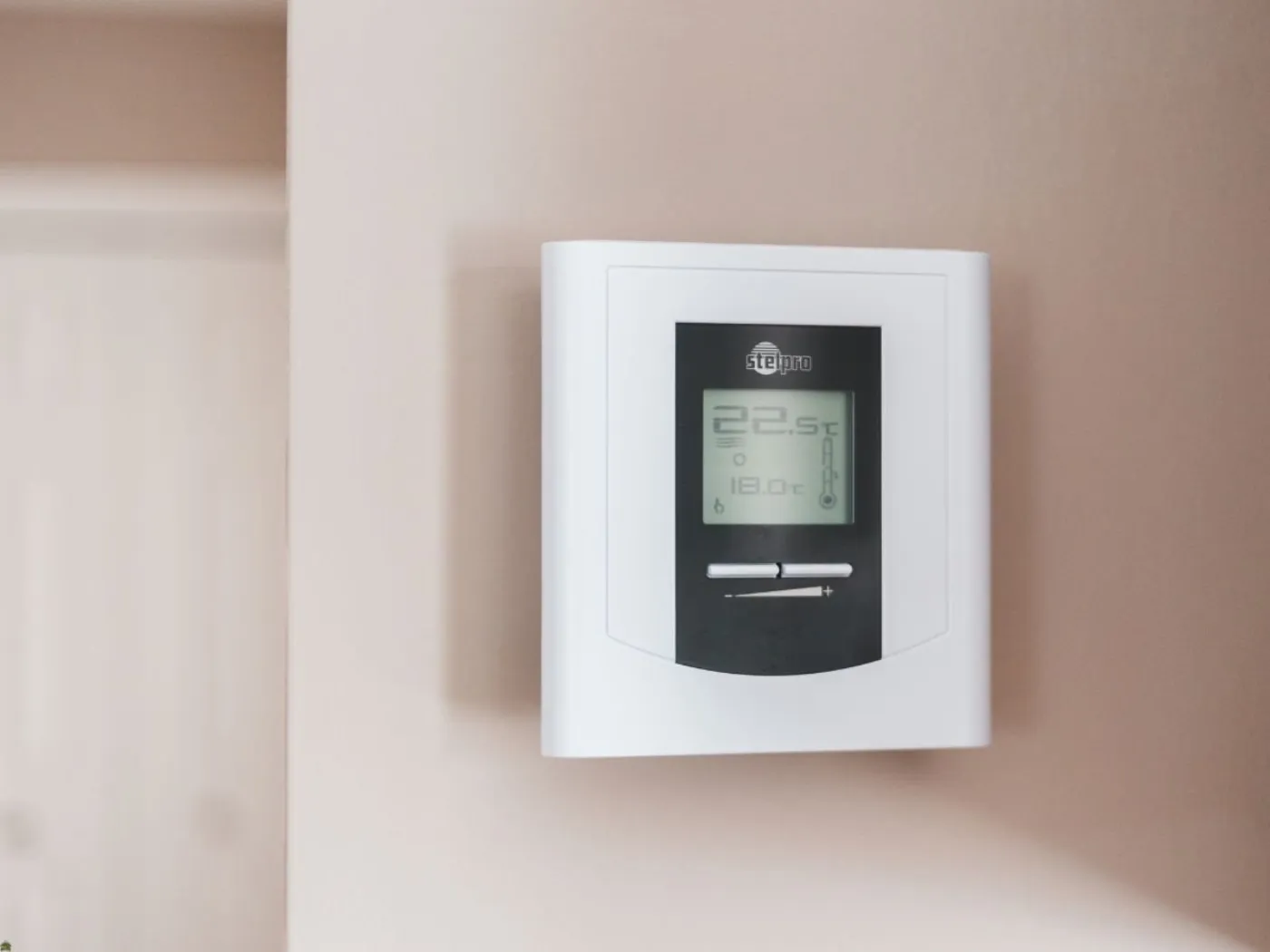
Why Heat Pumps Are Controlled Differently
A thermostat still tells the system when to heat or cool, but a heat pump has a few extra decisions happening in the background. The biggest one is how the system handles backup heat, since heat pumps can rely on auxiliary heat strips or another backup source when conditions demand it.
That is why control logic matters more than most people expect. According to ENERGY STAR, smart thermostats can help manage heating and cooling more efficiently, but compatibility with your HVAC setup is the key detail that determines whether the control works the way you want it to.
We are going to cover the basics of standard thermostats, smart thermostats, and manufacturer-specific controls, plus the setup details that can make or break comfort. Small configuration mistakes can create comfort swings or higher bills, even when the heat pump itself is perfectly capable.
How a Standard Thermostat Controls a Heat Pump
The Core Signals the System Listens For
A standard thermostat can control many heat pumps using common low-voltage wiring. It sends basic calls for heating or cooling and can trigger the fan, but heat pumps add an extra control signal for the reversing valve, which switches the system between heating and cooling modes.
According to ecobee’s heat pump wiring guidance, that reversing valve is typically wired to an O/B terminal, and many systems also include wiring for auxiliary heat.
What We Are Really Controlling
- Heating and cooling calls tell the system when to run.
- Fan behavior can be set to run automatically or on demand for circulation.
- The reversing valve (O or B) determines whether the heat pump is in heating or cooling mode.
- Backup heat stages may engage when additional heating is needed, depending on system type and setup.
The big takeaway is that none of this is mysterious. It is still a thermostat doing thermostat things, just with a few extra moving pieces compared to a furnace-only setup, which is why correct configuration matters.
Smart Thermostats Bring Convenience, Scheduling, and Fewer Who Touched the Thermostat Moments
What Smart Thermostats Add That Matters for Heat Pumps
Smart thermostats add scheduling, remote control, and system insights that make day-to-day comfort easier to manage. According to ENERGY STAR, smart thermostats can help manage heating and cooling more efficiently, but the device has to be compatible with your HVAC system for it to work properly.
For heat pumps, the real value is how the thermostat handles staging decisions, especially around auxiliary heat. A well-configured heat pump thermostat should keep comfort steady without constantly jumping to backup heat when the heat pump can do the job.
Features Worth Calling Out
- Heat pump compatibility and correct equipment setup during installation.
- Smarter control of auxiliary or emergency heat behavior so we do not accidentally lean on expensive backup heat.
- Alerts, runtime insights, and remote access so we can spot patterns and adjust without guesswork.
A good smart thermostat setup should feel like the system is quietly doing its job in the background. If it feels like we are constantly tinkering in an app to stay comfortable, that is usually a setup issue, not a smart thermostat problem.
Manufacturer and Communicating Controls: When the Heat Pump Wants Its Own Brain
Why Some Systems Prefer a Matching Control
Some higher-end heat pumps are designed to communicate with a proprietary control, which can unlock staging, modulation, and system management features that a generic thermostat may not fully support. As noted by Carrier, the Infinity System Control is built to be used within a communicating system so it can manage advanced features and system performance.
This is less about brand loyalty and more about letting the equipment use its best capabilities. When the system can share more detailed operating data, it can make smaller, smarter adjustments that support comfort and efficiency.
When We Recommend the Matching Control
- Variable-capacity systems where fine modulation matters for steady comfort.
- Hybrid or dual-fuel setups that need coordinated decisions between heating sources.
- Systems designed around a communicating platform where the control is part of the performance package.
In those scenarios, the best thermostat is often the one made for that system, even if it is not the most talked-about heat pump thermostat on the shelf. We focus on what will actually deliver stable comfort and predictable operating costs, not just what looks coolest on the wall.
Setup Details People Miss That Can Make Costs Jump
Auxiliary Heat vs Emergency Heat
Auxiliary heat is typically automatic support when the heat pump needs help maintaining the set temperature. Emergency heat is a separate mode meant for situations where the heat pump cannot run properly and you need to rely on backup heat temporarily.
According to Google Nest Help, emergency heat is intended for use when the heat pump is not working, and using it unnecessarily can increase energy use.
Power and Wiring Basics
Many smart thermostats need a common wire or an approved power solution to operate reliably. We also confirm the reversing valve setting and staging configuration so the system responds correctly and does not call for backup heat more often than it should.
Quick Setup Checks We Always Verify
- Confirm the O/B reversing valve configuration so heating and cooling modes behave correctly.
- Verify auxiliary heat staging and lockout behavior when the system supports it.
- Ensure the thermostat has adequate power and correct wiring, including the common wire when required.
When these details are set up correctly, comfort becomes predictable and operating costs make more sense. Proper configuration is not guesswork, and it is one of the easiest ways to protect both comfort and cost.
Next Steps for Choosing the Right Controls
At the end of the day, controlling a heat pump comes down to matching the thermostat to the system and setting it up correctly. A standard 24V heat pump can often be controlled well with either a basic thermostat or a compatible smart thermostat, while a communicating system typically performs best with the manufacturer control that was built to access its full features. As noted by ENERGY STAR, compatibility is the key checkpoint for smart thermostats, because the right match is what enables proper operation and the benefits people expect.
If comfort still feels inconsistent, the fix is usually not more fiddling with schedules. It is confirming the equipment type, verifying wiring and O/B configuration, and making sure auxiliary and emergency heat behavior is set correctly so the system is not wasting energy. PowerHouse Home Performance can evaluate the controls and configuration, then recommend the most practical heat pump thermostat option for your home so comfort feels steady and costs stay predictable.