
You’re not here for a 40-paragraph debate about equipment specs. You’re here because you want to stop doom-scrolling HVAC opinions and make a smart call that won’t punish you every time the temperature drops. Fair. Nobody wants to “learn a new hobby” just to keep their living room from feeling like a ski lodge lobby.
In CO and WY, the right answer depends less on brand names and more on how your home behaves when it’s cold and windy. The Department of Energy makes the same point in different words: comfort and efficiency come from a whole-house approach, not just swapping equipment. Air sealing and insulation play a major role in comfort because reducing air leakage helps cut heating costs and improve how a home feels, room to room.
That’s why offers and opinions can’t decide this for you. The fastest path to clarity is one question, then a quick decision tree, then a few real-world factors that confirm you’re not about to pick a system that spends all winter fighting your house instead of heating it.
The One Question That Decides the Direction

Is Your Home Set Up To Hold Onto the Heat You Pay For
If your home leaks air like a screen door in a snowstorm, any heating system is going to feel like it’s working overtime. The Department of Energy is pretty blunt about this: reducing air leakage is a cost-effective way to cut heating costs and improve comfort, because less outdoor air is barging in uninvited.
That’s why this question is the shortcut in the heat pump vs furnace debate. A tighter, better-insulated home gives you more options, and those options tend to behave more predictably when winter gets serious and the wind starts throwing elbows.
What “Set Up” Really Means
You don’t need a thermal camera to notice the everyday signs. Your house will tell on itself if you pay attention for five minutes.
- You can feel drafts, especially on windy days, even when the heat is running.
- You get big temperature swings between rooms, like the hallway is fine and the bedroom is auditioning for Antarctica.
- Bonus rooms or over-garage spaces always lag behind, no matter how high the thermostat climbs.
Quick Gut Check Before the Tree
If we’ve already done air sealing and insulation improvements, we’re typically in a better position to consider higher-efficiency equipment with confidence. If we haven’t, that doesn’t disqualify anything, it just changes what’s smartest to do first so you’re not buying a bigger system to compensate for a leaky envelope.
The Decision Tree for Heat Pump vs Furnace

If you’re tempted to answer based on what you wish were true, that’s normal. Ignore that. Answer like you’re describing your home to a brutally honest friend who has seen your “I’ll fix it this weekend” list and is not impressed.
This tree is not trying to crown a universal winner. It’s trying to get you to the right direction fast, before you spend real money and end up with a system that spends all winter arguing with your house.
Start Here and Follow the Answer You Actually Have
If Your Home Holds Heat Well and You Want One System for Heating and Cooling
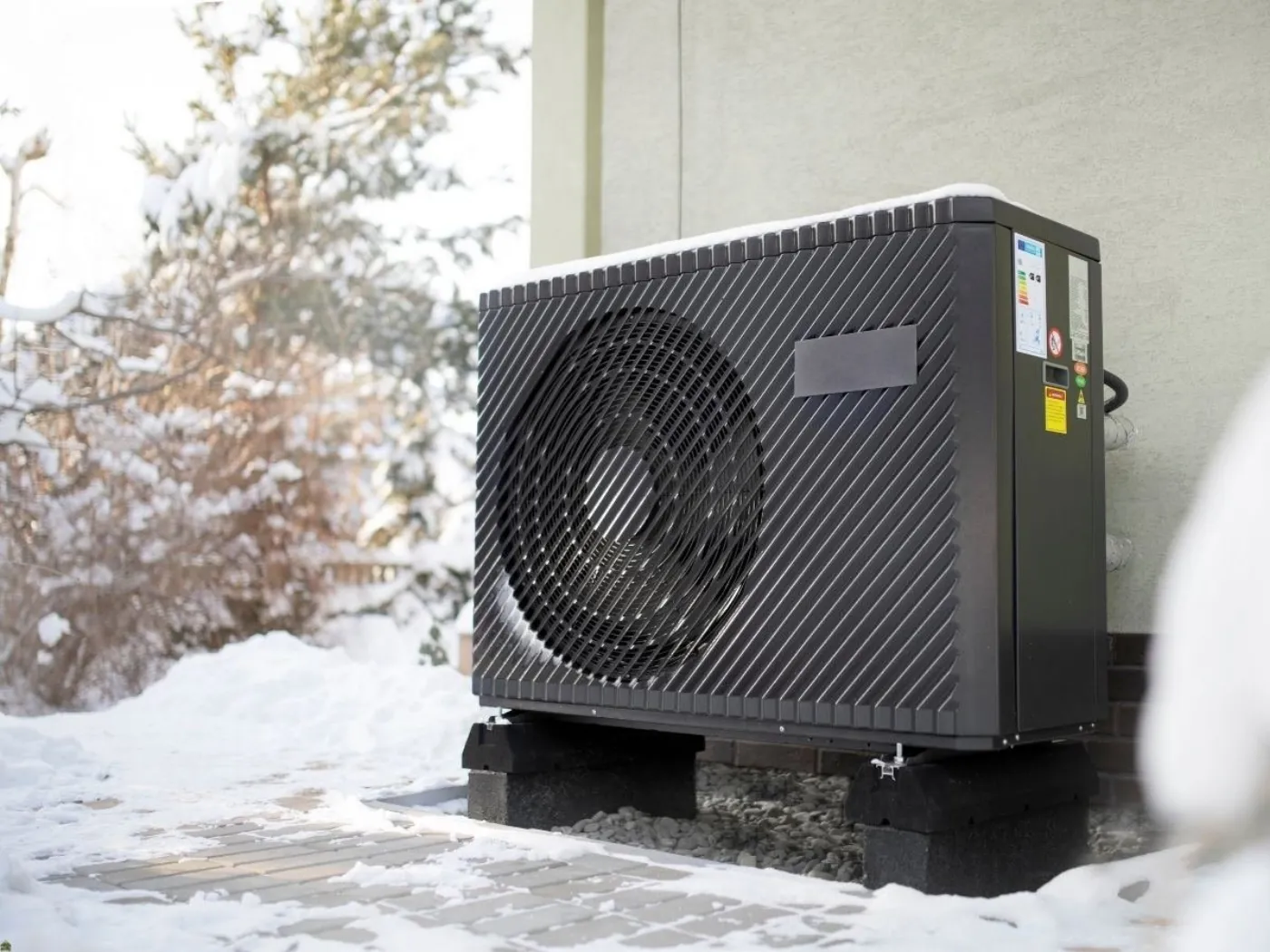
We typically lean you toward a cold-climate heat pump approach, with a plan for backup heat during the coldest stretches. DOE notes that cold-climate heat pumps are designed to maintain better capacity and efficiency below freezing compared with traditional heat pumps, but extreme cold performance is still something to plan for, not assume.
- Cold-climate heat pump plus a backup heat strategy can be a practical, CO and WY friendly setup.
- A dual-fuel configuration is one common way to handle colder temperatures by switching to a gas furnace when it makes sense.
If Your Home Struggles To Hold Heat or You Have Big Comfort Gaps
We typically point you toward improving the envelope first, then re-evaluating equipment. Otherwise you risk paying for extra capacity that is basically just covering for air leaks and weak insulation.
If You Want the Simplest Path With the Least Change and You Already Have Gas Service
We often steer you toward a high-efficiency furnace as the straightforward move, especially if cooling is already handled separately. It’s a familiar setup, fewer moving parts in the decision, and it plays nicely with homes that are not ready to “go all-in” on a different approach.
The 5 Factors That Confirm the Right Branch in Heat Pump vs Furnace
If the decision tree pointed you in a direction, these five factors are how we sanity-check it. Think of them like the second opinion you actually want: practical, local to CO and WY, and allergic to magical thinking.
None of this requires you to memorize HVAC acronyms. It’s just about matching the system to your home, your weather, and your tolerance for “surprises” in January.
1) How Cold It Gets and How Long It Stays There
Cold-climate heat pumps are built to keep running in below-freezing temps, but output and efficiency still vary by model and conditions. ENERGY STAR’s cold-climate benchmarks include low-ambient performance testing at 5°F, which is a solid reality-check number when you’re thinking about winter confidence.
- If your area routinely lives in deep cold for long stretches, plan equipment and backup strategy accordingly.
- If cold snaps are shorter and bounce back, you may have more flexibility in how you configure the system.
2) Altitude and Installation Quality
At altitude, details matter more. Sizing, airflow setup, and commissioning are not “nice extras,” they’re what separates “this is great” from “why is my house doing this.”
We see it all the time: the equipment is fine, but the install choices weren’t. That’s why we treat the design step like it’s part of the equipment.
3) Your Ductwork and Airflow Reality
Ducts are the delivery truck. If the truck has holes in it or the route makes no sense, the package shows up late, damaged, or not at all.
- Weak airflow in certain rooms often means duct sizing, leakage, or balancing is part of the solution.
- If you’re going ductless, placement and zoning become the comfort make-or-break, so we plan the layout like it matters. Because it does.
4) Do You Want One System or Two
Some people want simplicity. Others want familiar. Both are valid, as long as you’re honest about what you’re signing up to maintain over the next 10 to 20 years.
The Practical Framing
- One system for heating and cooling can simplify maintenance scheduling.
- Two systems can mean more specialized components, and more things that can need service over time.
5) Operating Costs and Incentives Where You Live
This isn’t a promise of savings. It’s a reminder to check the math using your actual utility rates and the incentives available where you live, because rebates can change the upfront equation fast.
- Colorado: Xcel’s heat pump rebate pathways can materially affect payback, depending on the program and equipment tier.
- Wyoming: incentives vary by utility and year, so we verify what’s active before we count it as part of the plan.
Quick Decision Check Table
| If This Is True in Your Home | It Usually Means You Should Prioritize |
| Long, sustained deep-cold periods | Winter performance planning and backup strategy |
| High altitude or finicky comfort history | Design, sizing, and installation quality |
| Rooms with weak airflow | Duct improvements or smarter zoning |
| You hate maintaining multiple systems | Simpler lifecycle and fewer components |
| Rebates are strong in your area | Re-running the cost math before deciding |
The Calm Bottom Line for CO and WY Homeowners

You don’t need to become an HVAC hobbyist to make a smart decision. Answer the one question honestly, follow the decision tree, then use the five factors to sanity-check your direction. If your home is leaky, start there, because DOE is clear that air sealing is one of the most cost-effective ways to cut heating costs and improve comfort.
Do that, and you’ll land on a choice that matches your home’s reality, handles winter with confidence without overpromising, and doesn’t turn your mechanical room into a long-term science experiment. And if you’re leaning heat pump in a cold climate, DOE also notes that traditional heat pumps can see performance decline in colder climates, which is why cold-climate models and a backup plan matter.